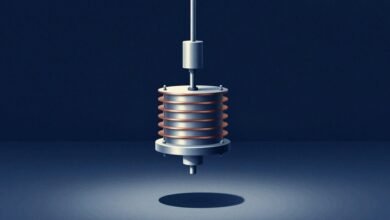
IndiaAI’s third compute tender will add roughly 3,850 graphics processing units and 1,050 Google Trillium tensor processing units, according to reporting on 18 November. The TPU order is the first for the programme. It takes India’s stated public compute pool beyond 34,000 accelerators, a number that has become the standard way to measure the country’s AI ambitions. The harder question is how many of those chips are actually used.
The tender is small beside the investment pledges announced by hyperscalers this year. Rhodium Group listed about $316 billion in Indian data-centre commitments as of 27 October, with Reliance and Adani accounting for two-thirds of the total. Google’s own commitment is $15 billion over five years for an Andhra Pradesh AI hub. A tender worth a few thousand chips is a rounding error against that figure. It is also the part of the stack the government can directly control.
What the Third Tender Adds
The IndiaAI Mission was designed to buy compute at scale and rent it to researchers, startups and public agencies at subsidised rates. The first two rounds created a pool of more than 38,000 GPUs, according to government statements. The third round adds capacity and, for the first time, a non-Nvidia accelerator class. Roughly 1,050 Trillium TPUs are expected alongside about 3,850 GPUs from conventional suppliers.
Official figures do not line up perfectly. A Digital India page dated 14 October says more than 38,000 GPUs have been onboarded. An August factsheet put the number above 45,000 as of June. The new tender is reported to take the total past 34,000, which suggests the counts measure different things: procured, onboarded and allocated are not the same state. None of the documents publishes a monthly utilisation series.
Why Trillium Matters
Google introduced two new variants of its in-house tensor processing units on 9 November, stepping up a challenge to Nvidia that has moved from internal use to a commercial chip business. Reuters reported that Alphabet is now selling homegrown AI chips to cloud customers, though building inventory ahead of demand is straining cash flow. Trillium is the generation that IndiaAI is buying into.
For Indian researchers, the appeal is price and availability rather than loyalty to a vendor. They are less flexible than GPUs for general-purpose work, and the ecosystem of trained engineers is smaller. Adding them to a public pool makes sense only if the mission also funds the training to use them. A chip that no one knows how to programme is an expensive heater.
The 34,000 Number and Its Caveats
Public compute figures in India have a habit of being quoted without a date. The 34,333 GPU figure in the May 2025 tender round is from a Press Information Bureau release. The 38,000-plus figure is from October 2026. The 45,000-plus figure is from a June factsheet published in August. Placed side by side, they look like a shrinking fleet. In practice they count different categories at different moments.
This matters because the mission’s credibility rests on usable capacity, not procurement announcements. A Rhodium Group report in October said nearly 80% of subsidised GPUs were unused, though it did not publish the underlying source. The government has not confirmed the figure. It has published GPU-hour allocations from April to July 2025, but those are a snapshot, not a running utilisation rate.
Hardware is the easy part. Getting 34,000 chips used is the hard part.
There is a structural reason for low utilisation. India approved 190 AI research projects under the mission, but many research teams lack the engineering support to move from a prototype to a training run. Model training also needs clean datasets, reliable storage and schedulers that can queue jobs efficiently. Buying accelerators solves one constraint in a chain of five.
Power, Water and the Vizag Hub
Andhra Pradesh Chief Minister N. Chandrababu Naidu said on 12 November that Google’s $15 billion AI hub in the state is on track to begin operations in 2028. He pledged uninterrupted power and water while acknowledging objections from residents and environmental groups about resource strain. The state is developing nearly 160 gigawatts of renewable capacity, including solar and transmission projects, and is pursuing wind, pumped storage and batteries. Thermal power would meet short-term needs, he said.
The associated Visakhapatnam campus is being built with AdaniConneX and Nxtra by Airtel and is described as a gigawatt-scale facility. Google has said it will use advanced air cooling to reduce water demand. That reassurance has not ended the local debate. Water shortages in Visakhapatnam are a live political issue, and the Polavaram dam project, cited as part of the answer, is targeted for completion only in March 2027.
The tension is not unique to India. Data centres in Europe and Australia are facing resistance over electricity, water and land use. India’s scale makes the trade-off sharper: a single hyperscale campus can require several gigawatts of wind and solar to run reliably, along with battery storage measured in gigawatt-hours. The 1 GW figure is a load, not a building.
The Utilisation Question
India’s AI policy has been strong on announcements and weak on measurement. The mission has a budget of ₹10,372 crore and a clear objective: make compute affordable enough that Indian researchers do not default to foreign clouds. Whether it works will be decided by utilisation, model quality and the number of companies that build products on the public stack.
The Trillium order is a small step in the right direction. It diversifies the hardware base, gives engineers a second architecture to learn, and signals that the government is willing to buy beyond the obvious supplier. But adding 1,050 chips to a pool of tens of thousands does not change the national picture on its own. It changes the picture if those chips are booked, used and producing models that someone can deploy.
Also read: Andhra Pradesh will pay 80% for a fab. The catch is the other 20%.
Illustration generated with AI (Gemini 3.1 Flash Image) for The Crescent World.