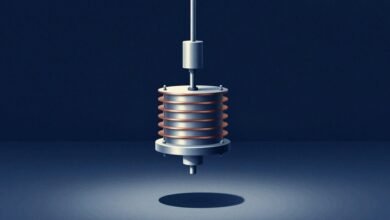
A Pune startup has built a laboratory-scale atomic clock prototype at a moment when precision timing is becoming a strategic supply problem. The Hindu reported on 21 November that QuPrayog Private Limited has developed a rubidium-87 prototype using coherent population trapping, or CPT. It took seven months to build, sits at technology readiness level 4, and is roughly 50 times more stable than a free-running crystal oscillator over 1,000 seconds.
The company says it wants a miniaturised product before the end of 2027. That is the right ambition, and also the hard part. A prototype proves that the physics works in a lab. A product has to survive power budgets, heat, vibration, cost, calibration and procurement.
Why Atomic Clocks Matter
Atomic clocks are invisible infrastructure. Satellite navigation, telecom networks, power grids, space missions, financial systems and military platforms all depend on timing that does not drift. NavIC, India’s own satellite navigation system, is only as useful as the timing chain behind it.
The Hindu notes that high-performance atomic-clock technology is increasingly subject to export controls. That turns a niche instrument into a sovereignty question. If a country cannot buy, repair or replicate the clock inside its own systems, it has outsourced a layer of national capability.
What the Prototype Proves
Technology readiness level 4 means a component or breadboard has been validated in a laboratory. It is a real milestone, especially for a seven-month build by a startup. The reported stability gain over a free-running crystal oscillator shows that the core approach works.
It does not yet prove that the clock can be made small, cheap, rugged and repeatable. Those are different engineering problems. A lab prototype can live with careful operators, controlled temperatures and bench power. A fielded clock cannot.
Why Miniaturisation Is the Real Target
CPT-based rubidium clocks are attractive because they can be much smaller than traditional atomic-clock architectures. The report says the aim is a miniaturised product before the end of 2027. That would move QuPrayog from instrument-maker to component supplier, which is where the strategic value sits.
The key tests will be size, weight, power consumption, warm-up time, long-term drift and behaviour under field conditions. Customers do not buy a clock because it works once on a bench. They buy it because it keeps working in a satellite, a telecom rack, a vehicle or a forward operating base.
A prototype proves the physics. A product survives procurement.
The National Quantum Mission Angle
QuPrayog’s work fits squarely inside India’s National Quantum Mission. The Prime Minister’s Office says the mission was approved on 19 April 2023 with a budget of ₹6,003.65 crore for 2023-24 to 2030-31, to seed and scale quantum research and industry.
That funding can support research, but it cannot create demand by itself. The next step is for Indian agencies to become design partners: ISRO for navigation and space timing, telecom operators for network synchronisation, defence for resilient systems, and public financial infrastructure for secure timestamps. Without early customers, promising prototypes tend to remain promising prototypes.
What to Watch
Watch the readiness level, not the press release. Does the clock move from TRL 4 to field trials? How much of the laser, vapour cell and control electronics stack is indigenous? Can it hold performance under temperature change and vibration? And does QuPrayog get a named customer before the 2027 target?
What It Means
India does not need to build every component of every system. It does need to own the components that can be used to stop other systems from working. Timing is one of them.
QuPrayog’s prototype is a promising start. The real milestone will be the day an Indian system keeps accurate time because a small box from Pune is inside it.
Also read: Trump wants a tax on data centres abroad. India should read the fine print and Andhra Pradesh will pay 80% for a fab.
Sources: The Hindu, Principal Scientific Adviser, National Quantum Mission.