

Beyond Cricket: How Modi’s Sporting Vision Is Turning India into the Global South’s Next Sports Superpower

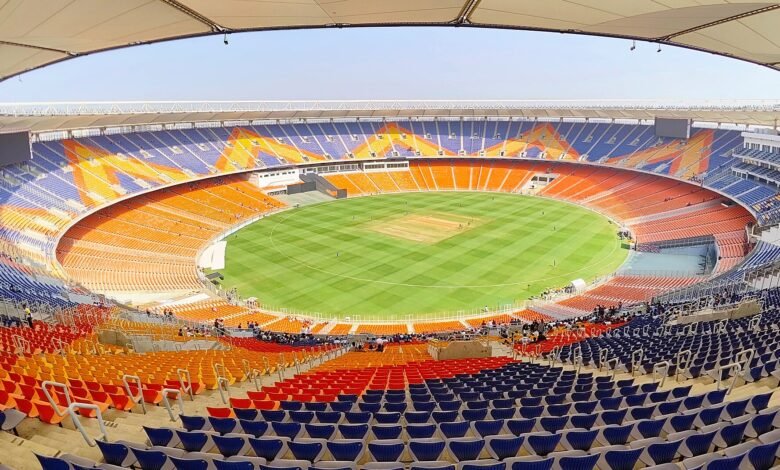
For most of modern sporting history, the division of global labour was brutally simple: the North hosted, the South supplied audiences and raw talent. In November 2025 that division formally cracked. Ahmedabad won the right to host the centenary 2030 Commonwealth Games — the hundredth edition — chosen specifically for having world-class facilities already standing, with an Olympics bid for 2036 filed behind it. Add an ₹36,441 crore eightfold expansion of Khelo India approved in July 2026, and the question is no longer whether India can host world sport, but what “world sport” looks like when the Global South’s largest nation starts writing its programme.
The money: a decade-scale bet
The Union Cabinet’s July 2026 approval was the biggest number in Indian sporting history: ₹36,441 crore for a revamped Khelo India and a strengthened National Sports Federations scheme running 2026–27 through 2030–31 — nearly eight times the previous cycle, timed like a countdown to Ahmedabad 2030. The piece was presented as India’s most ambitious sports development programme since Independence: a full talent pathway from feeder schools — Khelo India Feeder Schools, elite vidyalayas, “emerging athlete” categories expanding structured coaching roughly tenfold — through national centres of excellence and army-backed youth sports companies, to elite international competition. Finance Minister Nirmala Sitharaman had already framed it in February’s budget as a ten-year mission: foundation, intermediate and elite training centres, systematic coach development, sports science, and leagues from school to national level.
The venues: already building the 2030s
- SVP Sports Enclave, Ahmedabad. A 335-acre complex wrapped around the 132,000-seat Narendra Modi Stadium, adding a 12,000-capacity aquatics centre with three Olympic-standard pools, a 24,000-seat tennis centre, and an 18,000-seat multipurpose arena — targeted fully operational by 2029, estimated at ₹5,000–6,000 crore.
- Karai sports hub. A 143-acre Gujarat Police Academy campus gaining a 50,000-seat athletics stadium, international indoor shooting ranges and a high-performance arena, planned at about ₹1,450 crore.
- Done and tested. The ₹800-crore Veer Savarkar complex already hosted the Commonwealth Weightlifting Championships and Asian Aquatics Championships; the 2027 World Police and Fire Games — 10,000-plus competitors from 72 countries — arrive as the first full organisational rehearsal.
- The bigger table. The 2036 Olympic and Paralympic bid remains officially live, with Ahmedabad’s legacy infrastructure the heart of the case.
Stadiums are the least interesting part. The real infrastructure is eleven crore school athletes who expect to compete.
The Crescent World
Indigenous sports going global
The most original chapter is programmatic, not physical. Commonwealth Sport’s leadership has confirmed that kabaddi, kho kho, mallakhamb and yogasana are under consideration for the 2030 Games programme — a deliberate “host flavour” policy with a catch: international federations must build competitive ecosystems beyond India so the sports are not competed by one nation alone. That is soft power mechanics in its purest form. India originated and industrialised kabaddi through the Pro Kabaddi League, turning a village sport into primetime television; exporting it to the Commonwealth multi-sport stage means exporting a ruleset, a league model and a cultural claim simultaneously. No Global South country has ever done that on this scale.
The pipeline evidence is already visible outside cricket — the world chess crown through D Gukesh, Olympic javelin medals through Neeraj Chopra, badminton world titles, a functioning women’s cricket economy — but the 2030s thesis rests on system, not individual genius: the sports-science layer, the coaching economy and ten crore children in structured programmes.
The honest frictions
- The 2010 shadow. The last Delhi Commonwealth Games were scarred by corruption and delays; organisers know the reputational bar this time is notably higher and will be judged on delivery, not vision.
- Governance. Sports federation reform remains patchy; international bodies still scrutinise administrative standards as closely as venues.
- Conversion risk. Infrastructure can be built by a date; a medals table is not. Investment must convert hosting enthusiasm into rural participation and district-level talent retention.
There is also a sponsorship economy forming around the hosted events themselves. Indian corporates that once bought cricket inventory exclusively are signing multi-year packages across athletics, shooting and aquatics precisely because Ahmedabad’s calendar now guarantees global broadcast weeks. That commercial pull — venues that stay busy after 2030 — is what separates a legacy strategy from a two-week spectacle, and it is the metric international federations privately watch before awarding future events.
The realistic forecast is two-track. Non-cricket India rises to the top tier of Commonwealth medal contenders by 2030 and, with the women’s sport economy expanding, becomes a genuine top-five Olympic force somewhere in the 2036–2040 window — while the hosting bid, win or lose in 2036, anchors South Asia as sport’s next growth continent. Beyond gold, the deeper ambition is demographic: sport as a national development pathway for a country where the median age is under thirty. “Beyond cricket” is no longer a slogan in India — it is a budget line, a Games programme under negotiation, and a decade with dates on it.
Have your take. Will India match hosting with medals — and should kabaddi make the Commonwealth Games programme? Cast your vote in the comments, and share this with the sports fan in your life.
Featured image: the Narendra Modi Stadium, Ahmedabad. Photo: A Cricket Premi (CC BY-SA 4.0), via Wikimedia Commons.


