


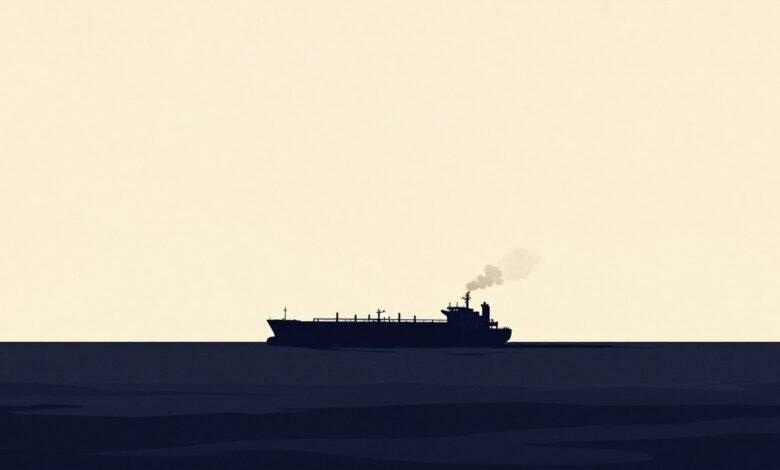
The first explosion came shortly after 7 pm UTC on Monday, which was just past midnight on Tuesday in India, and it hit the engine room. The LPG tanker MT Tara Gas was about seven nautical miles north of Khasab, on the Omani side of the Strait of Hormuz. The fire knocked out the ship’s power. The next morning a second strike started another fire, and the crew abandoned the vessel.
By Tuesday afternoon the count was this: 25 people on board, 24 of them Indian nationals. Twenty-one were taken ashore at Khasab. Two injured crew are in hospital. One Indian seafarer is still missing. The Ministry of External Affairs condemned the attack, and the Indian embassy in Muscat said it was working with Omani authorities on the search.
What happened, in order
The vessel is a Panama-flagged liquefied petroleum gas carrier. The first strike disabled it; the second, on a ship already unable to manoeuvre, set it burning again and forced the abandonment. The UK Maritime Trade Operations office issued an advisory warning ships in the area to exercise caution. Nobody has claimed the attack. That absence is itself part of the story: in a corridor where the shooting has continued for months, attribution has become a slower process than rescue.
The rescue was Omani. Coast guard craft took the crew off and brought them to Khasab, the small port on the Musandam peninsula that sits almost directly under the traffic separation scheme. The two injured men were moved to hospital. Indian embassy officials travelled to be with the survivors, and New Delhi’s statement thanked Oman explicitly, which is the kind of sentence diplomats write when they know who did the actual work.
What remains is one missing man and a ship that is still afloat, still loaded and last reported on fire somewhere north of a coastline that has no interest in hosting an environmental emergency.
The ship was flagged in Panama. The crew was Indian. The water was Omani. Almost nobody who owned the risk was in the same country as the people carrying it.
The Crescent World
The corridor has not recovered
The Strait of Hormuz has not worked normally since early March. Iran has attached seven conditions to reopening it, Washington has not met them, and the waterway that once carried about a quarter of the world’s oil remains a place where insurers, not schedules, decide what sails. Those seven conditions explain why a tanker can still be attacked in a corridor the world has spent nine months talking about.
India’s exposure is unusually direct. Before the closure, roughly 90 per cent of India’s LPG imports came through this strait. LPG is the cylinder under the stove; it has no easy substitute and very little strategic storage. India has diversified crude aggressively over the past year, but gas and cooking fuel have been slower to move, which is why an attack on one LPG carrier lands in Indian kitchens in a way an attack on a crude tanker does not.
Delhi’s answer is a training programme
At the East Asia Summit in Manila this week, Prime Minister Narendra Modi launched a Seafarers’ Safety Initiative, built around joint training and a shared emergency response mechanism for merchant crews in the region. In the same speech he referred to attacks in West Asia and the Black Sea that have killed Indian seafarers, and linked the initiative to India’s argument for peace in both theatres.
The summit also produced an East Asia Summit cyber crime conference to be hosted in India, a Lothal maritime heritage festival and a conclave of East Asia Summit university heads at Nalanda next year. Those are the soft instruments of maritime policy. They matter over a decade. They do not put a coast guard cutter beside a burning tanker at two in the morning.
Who pays for the risk
Merchant crews are the most globalised workforce in the world and the least insured against geopolitics. A Filipino, Indian or Ukrainian rating signs a contract with a manning agency, joins a ship owned by a company registered in one jurisdiction, flagged in another and chartered by a trader in a third. When the shooting starts, the crew is the part of the chain that cannot be rerouted.
War-risk premiums rise, owners accept them or stop sailing, and the extra cost is passed into freight and then into the price of whatever the ship carries. That is the mechanism by which a strike near Khasab becomes a line item in an Indian household budget. It is also the reason the Indian government’s response has been consular and political rather than military: there is no Indian warship on station in the strait, and no plan to send one.
What to watch
Four things. Whether the missing seafarer is found. Whether the Tara Gas is towed clear or burns out where it lies, because a laden LPG carrier is an environmental problem before it is a diplomatic one. Whether the attacks on shipping accelerate now that a second strike has been used to finish a disabled vessel. And whether the Seafarers’ Safety Initiative acquires a budget, a headquarters and a drill calendar, or remains a paragraph in a summit declaration.
India’s seafarers will keep sailing, because the wages are good and the routes are the only ones that exist. The least a government can do is count them properly when something goes wrong, and say their names when it does. On Tuesday, one name was still unaccounted for.
Illustration generated with AI (Z-Image Turbo, rendered locally) for The Crescent World.


