

For two decades, travel media told a familiar story about the rising destinations of the world: Bali, Dubai, Bangkok, Barcelona. That list is changing shape, and the most striking change runs through India — a country that tourism analysts have long called the world’s most undervalued destination. From spiritual circuits drawing unprecedented crowds, to Himalayan roads rebuilt into adventure arteries, to coastal luxury that rivals anything in Southeast Asia, India’s travel decade is finally matching its culture’s global standing. Here is what is driving the boom, and what visitors should actually know.
The numbers behind the India travel boom
Travel to India operates at a scale no single statistic captures, but three together tell the story. Tourism is a top-ten contributor to India’s economy by most frameworks, supporting tens of millions of jobs. Domestic Indian travel — already enormous — has been growing at double-digit rates for years as new air routes, expressways and disposable income convert aspiration into weekend trips. And inbound interest, suppressed in the early 2020s, has been recovering steadily, with medical tourism, spiritual tourism and destination weddings adding high-margin layers that analysts once treated as niche. Behind all three sits an infrastructure transformation: dozens of new airports commissioned over the past decade, and a national highways programme that has quietly made multi-week road journeys possible for mainstream visitors.
Spiritual tourism: the new gravity
The single biggest phenomenon of the current cycle is spiritual travel. The consecration of the Ram Mandir in Ayodhya in January 2024 converted a pilgrimage queue into one of Asia’s busiest religious tourism flows — daily footfall measured in the hundreds of thousands at peak periods, a rebuilt airport, a wave of new hotels and pilgrim infrastructure across the town. The pattern repeats across the circuit: the Char Dham routes in Uttarakhand expanding their capacity with better roads and bridges, Kashi Vishwanath redeveloped as a broad heritage complex in Varanasi, and Kailash-Mansarovar pilgrimage flows reopening in 2025 after an India thaw with China. For global observers, this matters beyond revenue: spiritual tourism is how tens of millions of ordinary Indians engage the travel economy in the first place, and its spending is spreading through local economies that had never seen such circulation.
The classic India, upgraded
The icons remain the icons — and they travel better than any pitch deck:
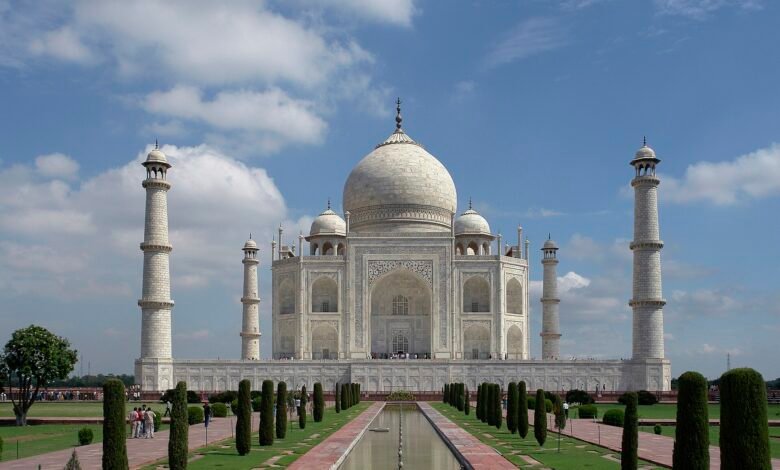
- The Golden Triangle and beyond. The Delhi–Agra–Jaipur circuit remains the global first-timer’s route, with Taj Mahal visitor numbers rivalling the world’s most-visited monuments, now fed by the smoother expressways of the 2020s.
- Kerala and the coasts. Ayurveda-led retreat culture, houseboats on the backwaters, and emerging beach hubs such as Varkala and Gokarna have blended health travel with unhurried coastal living — exactly the Goa-plus-wellness formula international guests now look for.
- The Himalayas. Manali–Leh, Zanskar, Sikkim and Arunachal routes have turned high-altitude motorcycling and trekking into a serious global niche, with Indian regional chains building capacity at altitudes where hotels barely existed a decade ago.
- City travel with a modern face. UPI One World — the wallet scheme letting foreign tourists pay Indian merchants digitally — has quietly removed the familiar cash friction that used to dominate visitor complaint lists.
India was never short of reasons to visit. It was short of reasons to book. The infrastructure decade changed that.
The Crescent World
What today’s traveller should know
- Plan by region, not by country. India is a continent-sized set of destinations. One week of Golden Triangle and one week of Kerala are two different trips; trying to fold them together is the classic first-timer error.
- Seasonality is severe. The Hill states and Himalayan routes peak in summer and require early booking; the plains and coasts turn best between October and March; and the monsoon is an experience in its own right — dramatic, lush and not for a first visit.
- Do the paperwork properly. Most nationalities need e-visas, high-altitude border zones need permits, and travel insurance is not a formality — healthcare quality varies widely across the country.
- Digital beats cash everywhere. International debit and wallet access, official heritage site e-tickets and ride-hailing apps have eliminated most of the payment and transport pain the old guidebooks warned about.
The honest frictions
Balance matters in travel writing. Air travellers still feel India’s airspace congestion crossing through the busiest metros; waste management on popular routes remains uneven; and solo female travellers should plan ahead on connectivity and nightlife options in smaller towns even as perception improves. None of this outweighs the actual experience, but it narrows the gap between brochure and reality — the gap that decides whether a visitor returns with a recommendation or a complaint.
The deeper trend is durable, though. India’s cultural standing is rising globally through food, sport, technology and film at the same time as its travel infrastructure finally keeps pace with its attractions. That combination — prestige and logistics arriving together — is the pattern of every destination that has become a global top-tier travel economy in the past fifty years.
Dreaming of a trip? Which Indian region tops your list — the Himalayas, Kerala, Rajasthan, or the temple circuits? Share your answer in the comments, and send this article to the friend who keeps postponing their India trip.
Lead image: The Taj Mahal, Agra. Photo: Yann (edited by King of Hearts), via Wikimedia Commons (CC BY-SA 4.0).