


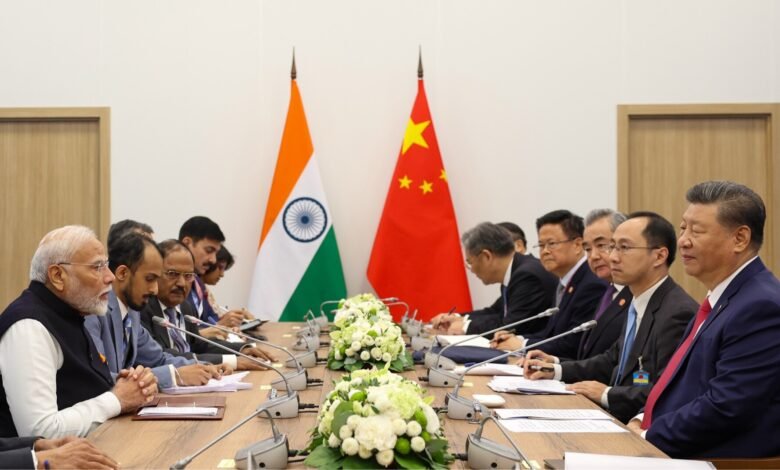
India begins its BRICS chairmanship in 2026 — the first time the country hosts the rotating summit leadership of the bloc since 2021. The timing could hardly be more interesting. The grouping has just expanded dramatically, is operating under open tariff threats from the United States, and carries within it the world’s most consequential unresolved bilateral relationship: the one between New Delhi and Beijing. India’s influence in BRICS is therefore not a niche diplomatic question — it is one of the levers that determines whether the world’s biggest Non-Western platform evolves into a pragmatic development forum or drifts into confrontation.
Where India already shapes the BRICS agenda
India’s influence in BRICS relations rests on several structural facts. It is the bloc’s most diplomatically versatile member — simultaneously a Quad partner of the United States, a Gulf defense and trade partner, and a founder-member of BRICS itself. It is the group’s fastest-growing large economy, meaning the development story BRICS sells is largely an Indian story. And it brings the bloc its most marketable technological asset: the world’s largest working model of digital public infrastructure.
- Digital public infrastructure (DPI). India’s UPI payment system, Aadhaar-scale digital identity and modular open-source approach have already been adapted through bilateral agreements with the UAE, Singapore, France and Sri Lanka. As chair, India is expected to push a BRICS-wide DPI adoption framework — commercial software built on open standards rather than a single-country monopoly.
- Institutional finance. The New Development Bank — whose first president was India’s KV Kamath — has built an approved portfolio of infrastructure, water and clean-energy projects, and is the bloc’s principal venue for local-currency project finance.
- The Global South bridge. India’s G20-style “Voice of the Global South” consultation model gives BRICS an entry route into dozens of African, Caribbean and Pacific economies without expanding membership formalities.
- Agenda discipline. Indian negotiators have consistently kept currency rhetoric out of summit declarations, anchoring BRICS direction toward trade facilitation and technology cooperation instead of monetary confrontation.
The opportunities on the table for 2026
India’s chairmanship opens four windows that pre-expansion BRICS could never open alone:
- Financial inclusion at scale. Coupling BRICS financial cooperation with Indian DPI standards would make the bloc the first great-power club to compete through public technology rather than reserve currency.
- Deeper trade integration with Gulf members. The UAE CEPA and similar bilateral frameworks create templates for intra-BRICS free-trade building blocks — exactly the sort of practical economics India champions.
- Global governance reform. India’s long campaign for UN Security Council reform, IMF quota rebalancing and technology-transfer fairness gets its best platform since the G20 presidency.
- Energy and food security architecture. India’s position as a principal buyer of discounted oil and fertilizer offers it region-relevant standing to design commodity-resilience proposals that exclude weaponized dependencies.
“India has never been for an anti-dollar policy.”
External Affairs Minister S. Jaishankar, speaking during the July 2025 BRICS summit period in Rio de Janeiro
The quote is the syntax of India’s BRICS strategy in a single sentence: belong, build, but never escalate into monetary warfare with the West.
The challenges: four friction points
- The India-China relationship. The border disengagement of late 2024 restored a fragile calm along the Line of Actual Control, and 2025 brought visible thaws — resumed direct flights, the return of Indian pilgrim travel to Kailash Mansarovar — but New Delhi calculates that trust is built through verified border peace, which in turn constrains the economic distance China wants from India within BRICS.
- The tariff problem. US policy has surfaced extra-tariff threats tied specifically to BRICS participation, making every BRICS initiative a geopolitical risk calculation. India has answered this pressure through the 2024–2025 trade-agreement strategy rather than defiance.
- Dilution vs. decisiveness. India has backed expansion but worries about a bloc too big for pragmatic outcomes, which is why the partner-country tier carries India’s fingerprints.
- The terrorism question. India needs BRICS declarations consistent with its position on cross-border terrorism; unity on this issue — exploited by Pakistan- and Iran-linked discussions in earlier summits — remains a negotiation India needs to run every year.
Case study: currency cooperation without a common currency
No issue signals India’s moderating hand more clearly than the currency debate. Proposals for a “BRICS currency” circulate in Moscow and Beijing; New Delhi has redirected them into workable territory: local-currency invoicing in bilateral trade, rupee-settlement mechanisms started with the UAE and Russia, and study of the payments-initiative framework floated at Rio 2025. India’s stance keeps the grouping useful to its members without demanding sacrifice of their relationships with Western financial systems — a thermodynamic model, not a wall.
The verdict for 2026
India’s influence in BRICS is a story of opportunity and of conditions. The opportunity comes from a rising power that sees the grouping as a Global South instrument and a chance to export working models of development. The constraint is in India’s conditioning: India will not underwrite an anti-Western bloc, will not let BRICS rival its US partnership, and insists that border peace with China precedes any deep alignment. If the 2026 summit ends with DPI frameworks, trade facilitation and climate-finance language rather than currency-war declarations, that will be India’s mark on the bloc — and among the most consequential exhibits of India’s global influence in a decade.
Your take? Is India’s “belong but don’t escalate” approach to BRICS realistic for the long term — or will pressure from Beijing and Washington force a sharper choice? Give your view in the comments, and share this analysis with fellow geopolitics enthusiasts.
Lead image: Prime Minister Narendra Modi and President Xi Jinping in talks at the 16th BRICS Summit in Kazan (October 2024). Photo: Prime Minister’s Office, Government of India, via Wikimedia Commons (GODL-India licence).


